Foot Reflexology Chart and Pressure Points: A Beginner’s Guide
Foot reflexology is one of those practices many people have heard about but don’t fully understand. You might have seen colorful foot charts online, watched someone press certain points on the feet, or heard claims that foot massage can affect different organs in the body. For a beginner, it can all feel confusing. How can the feet be connected to the rest of the body, and what do those strange maps on reflexology charts actually mean?
The idea behind foot reflexology is simple. Different areas of the feet are believed to be linked to different parts of the body. By applying pressure to specific points, practitioners aim to promote relaxation, improve circulation, and support the body’s natural balance. Whether someone approaches reflexology out of curiosity, stress relief, or wellness interest, the first real step is understanding the chart and the basic pressure points.
In this beginner’s guide, we will walk through foot reflexology in a clear and grounded way. You will learn how to read a foot reflexology chart, what the main pressure points represent, and how people commonly use them. The goal is not to overwhelm you with technical terms, but to give you a solid foundation so the charts and techniques finally make sense.
Understanding Foot Reflexology and How It Works
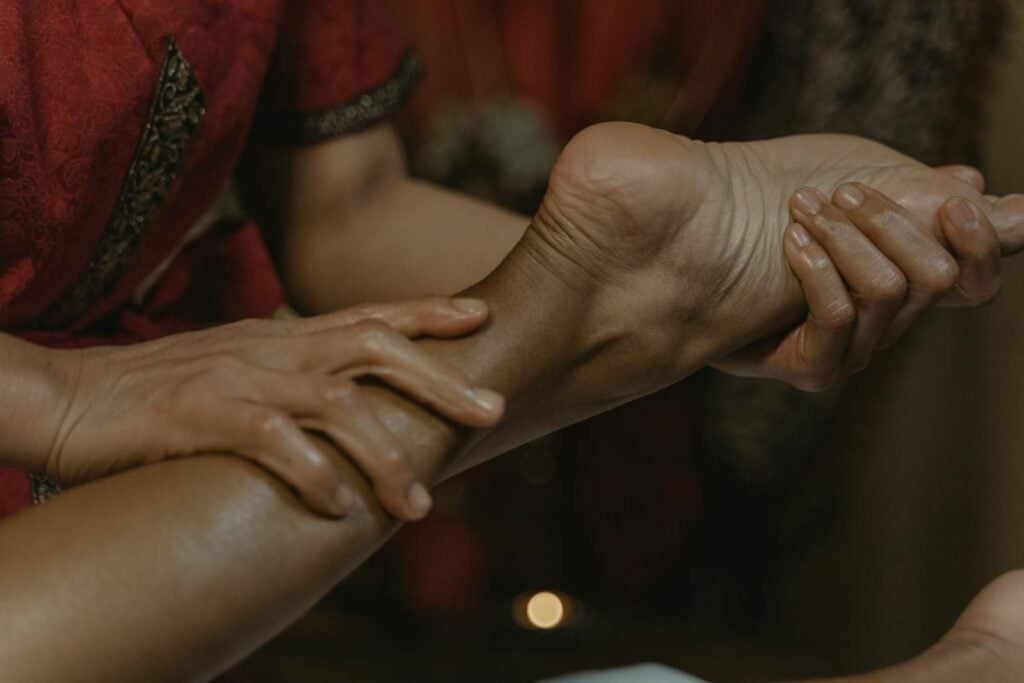
Foot reflexology is a therapeutic practice that involves applying pressure to specific points on your feet to affect corresponding areas throughout your body. The underlying theory suggests that your feet contain reflex points that mirror your entire body, creating a map where each zone connects to specific organs, glands, and body systems.
The practice traces its modern roots to the early 20th century when American physiotherapist Eunice Ingham developed detailed foot maps based on earlier zone therapy concepts. She proposed that the body could be divided into ten vertical zones, five on each side, and that these zones extend from your head down to your feet.
It’s important to understand that reflexology is considered a complementary therapy rather than a replacement for conventional medical treatment. Most practitioners position it as a tool for promoting relaxation, reducing stress, and supporting overall wellness alongside traditional healthcare. The practice has evolved over decades, with various schools developing slightly different charts and approaches, though the fundamental principles remain consistent.
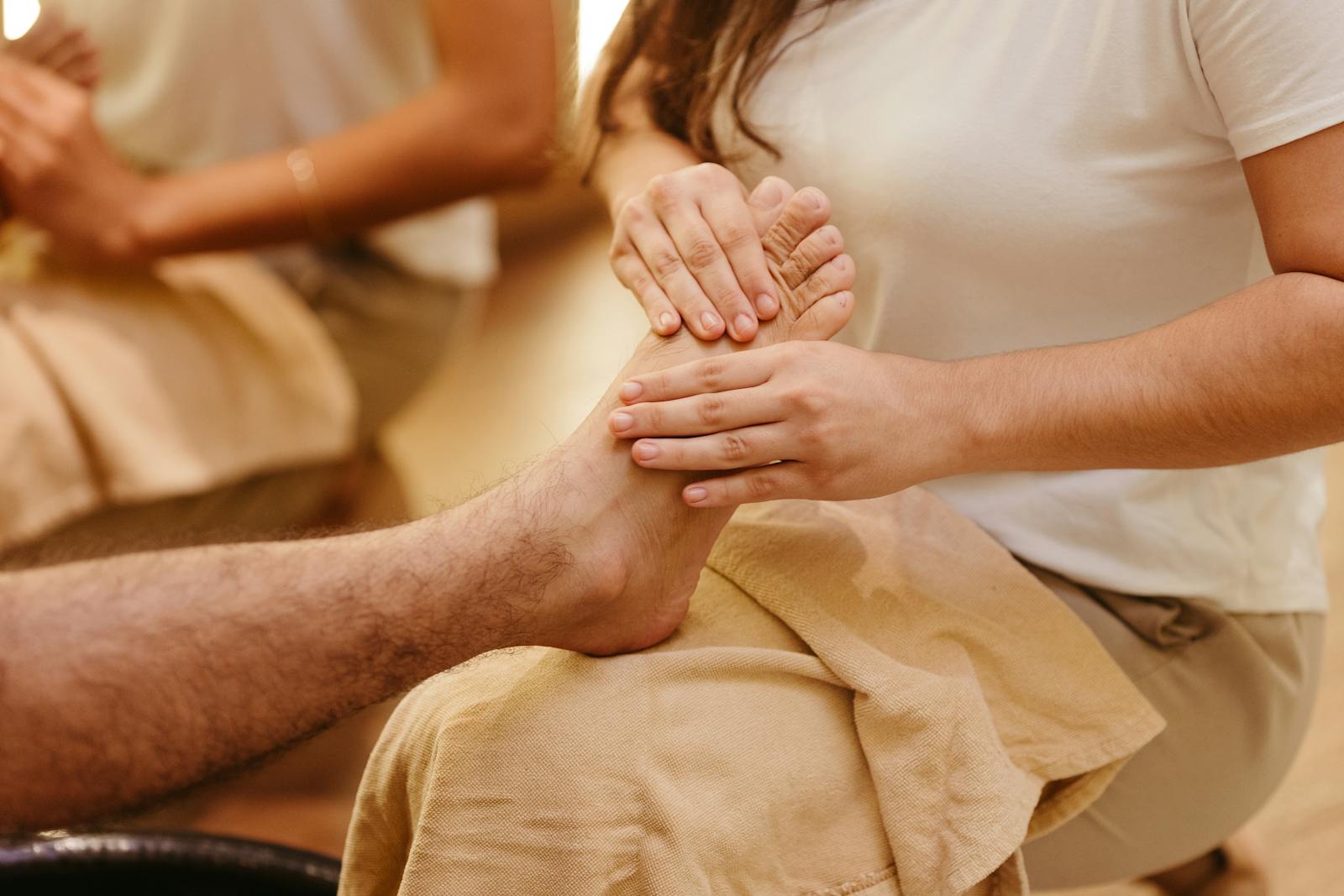
The experience of receiving reflexology typically involves lying or sitting comfortably while a practitioner uses their thumbs, fingers, and hands to apply pressure to specific points on your feet. Sessions usually last 30 to 60 minutes and often include work on both feet. Many people report feeling deeply relaxed during and after sessions, even if they remain skeptical about the specific health claims.
Reading Your Foot Reflexology Chart: The Complete Map
A foot reflexology chart visually represents how different areas of your feet correspond to various body parts and organs. Learning to read these charts helps you understand which pressure points to target for specific health concerns, though the maps can initially look overwhelming with their detailed divisions and labels.
The most fundamental principle to remember is that your right foot corresponds to the right side of your body, while your left foot maps to your left side. Organs that appear on both sides of your body, like kidneys and lungs, have reflex points on both feet. Organs positioned primarily on one side, like your heart (left) or liver (right), have their primary reflex points on the corresponding foot.
Your feet are typically divided into several major zones that correspond to different body regions. The toes represent your head and neck area, including reflex points for your brain, sinuses, eyes, and ears. The ball of your foot corresponds to your chest region, containing points connected to your heart, lungs, and shoulders. The arch of your foot relates to your digestive system and internal organs like your stomach, liver, kidneys, and intestines. The heel connects to your lower body, including your lower back, sciatic nerve, and pelvic region.
Key Pressure Points and What They Do?
Understanding specific pressure points and their purported benefits helps you target your reflexology practice to address particular health concerns or symptoms. While scientific evidence for these connections varies, many people report positive experiences when working these key areas.
Head and Stress Relief Points
The tips and pads of all your toes contain reflex points related to your head, including your brain, sinuses, and sensory organs. The big toe is particularly important, with points for your pituitary gland at the center of the toe pad and your brain across the entire toe. Applying pressure here is commonly recommended for headaches, migraines, and mental clarity.
The solar plexus point, located in the soft area at the center of the ball of your foot, is considered one of the most important stress-relief points in reflexology. Many practitioners begin and end sessions here because it’s thought to promote deep relaxation and calm the nervous system. To work this point, press your thumb gently but firmly into the center of the ball of your foot and hold for several seconds while breathing deeply.
Digestive System Points
The arch of your foot contains numerous reflex points for your digestive organs. The stomach point sits in the middle of your arch on the left foot primarily, while liver points occupy the right foot’s arch. Your intestine points spiral through the arch area, following the actual path of your digestive tract through your body.
For digestive issues like bloating, constipation, or indigestion, reflexologists recommend working the entire arch area with firm, circular thumb pressure. The specific location varies slightly depending on which digestive organ you’re targeting, but generally working the whole arch provides comprehensive digestive system stimulation.
Pain and Inflammation Points
The heel area contains reflex points for your lower back, sciatic nerve, and pelvic region. People dealing with lower back pain or sciatica often find relief by working the heel and the area just in front of it. The outer edge of your foot from below the little toe down to the heel corresponds to your hip, knee, and leg, making it relevant for joint pain and mobility issues.
The adrenal gland reflex point, located just below the ball of your foot on the inner edge, is thought to help with inflammation, energy levels, and the body’s stress response. This point is often incorporated into protocols for pain management and fatigue.
Respiratory and Heart Points
The ball of your foot beneath your toes contains reflex points for your chest area, including your lungs, bronchial tubes, and heart. The heart point is primarily on the left foot in the ball area beneath the second and third toes. Lung points occupy the ball of both feet across a wider area.
Working these points involves applying gentle but firm pressure with your thumb in a walking motion across the entire ball of the foot. This is commonly recommended for respiratory issues, though people with heart conditions should consult their doctor before targeting heart reflex points.
Here’s a quick reference guide to common pressure points and their applications:
- Big toe tips: Headaches, sinus pressure, mental clarity, pituitary balance
- Solar plexus (center of ball): Stress reduction, anxiety relief, deep relaxation, breathing regulation
- Arch area: Digestive problems, stomach issues, liver function, kidney support, intestinal health
- Heel and lower foot: Lower back pain, sciatica, pelvic issues, reproductive system
- Ball of foot: Chest tightness, respiratory issues, heart health, shoulder tension
- Inner foot edge: Spine alignment, posture issues, back support from neck to tailbone
- Outer foot edge: Hip pain, knee problems, leg issues, shoulder and arm tension
How to Practice Foot Reflexology at Home
You don’t need professional training to experience the potential benefits of foot reflexology. With proper technique and safety precautions, you can practice basic reflexology on yourself or exchange sessions with a partner to promote relaxation and address minor discomforts.
Preparing for Your Session
Start by creating a comfortable environment where you can relax without interruptions for 20 to 30 minutes. Sit in a comfortable chair where you can easily reach your feet, or lie on your bed with pillows supporting your back and legs. Many people prefer elevating the foot they’re working on by resting it on their opposite thigh or on a cushion.
Wash your feet thoroughly before beginning, and consider soaking them in warm water for 5 to 10 minutes to soften the skin and promote relaxation. Adding Epsom salts or essential oils like lavender to your foot soak can enhance the experience. Have a towel handy to dry your feet, and consider using a small amount of massage oil or lotion to help your thumbs glide smoothly across your skin.
Basic Techniques to Master
The primary reflexology technique is called “thumb walking,” where you use your thumb to apply pressure in a forward-moving motion across your foot. Bend your thumb at the first joint and use the inside edge of your thumb to create a walking motion, moving forward in small increments while applying steady pressure. This technique allows you to cover larger areas systematically while maintaining consistent pressure.
To perform thumb walking properly, place your thumb on your foot and bend it slightly. Press down firmly, then unbend your thumb slightly to move it forward a tiny bit, then bend and press again. This creates a caterpillar-like walking motion that covers your entire foot systematically. Move from the heel toward the toes, working in parallel lines across different zones.
For pinpoint pressure on specific reflex points, use your thumb or index finger to apply steady, firm pressure directly to the point for 5 to 30 seconds. The pressure should be firm enough to feel significant but not so intense that it causes sharp pain. A slight tenderness or “good hurt” feeling is normal and often indicates you’ve found an active reflex point that needs attention.
Safety Precautions and Contraindications
While foot reflexology is generally safe, certain situations require caution or avoidance. Pregnant women should avoid reflexology during the first trimester, and specific points related to the uterus and hormones should be avoided throughout pregnancy unless working with a qualified prenatal reflexology specialist. Some points may stimulate contractions or hormonal changes that could affect pregnancy.
People with foot injuries, fractures, gout, or active infections should avoid reflexology on affected areas until fully healed. Those with blood clots, deep vein thrombosis, or circulatory disorders should consult their doctor before trying reflexology, as pressure and manipulation might dislodge clots or worsen circulation problems.
Step-by-Step Home Practice Routine
Here’s a simple routine you can follow for a complete reflexology session:
- Begin with relaxation: Spend 2 to 3 minutes gently massaging each foot with broad, sweeping strokes to warm the tissue and promote relaxation.
- Work the toes: Rotate each toe individually, then apply thumb walking across the tips and pads of all toes to address head and sinus areas.
- Address the ball: Use thumb walking across the entire ball of both feet, paying special attention to the solar plexus point by applying sustained pressure for 30 seconds.
- Cover the arch: Systematically thumb walk across the entire arch area in horizontal lines from the inner to outer edge, covering all digestive organ points.
- Work the heel: Apply firm pressure to the heel and surrounding area, which corresponds to your lower back and pelvic region.
- Target the edges: Thumb walk along the inner edge (spine) from big toe to heel, and the outer edge from little toe to heel.
- End with integration: Finish by gently pressing the solar plexus point again, then massage the entire foot with broad strokes for 1 to 2 minutes.
Spend roughly 10 to 15 minutes on each foot, and always work both feet even if you’re targeting a specific issue. The body works as a whole system, so comprehensive coverage typically provides better results than focusing exclusively on one area.
What Science Says About Reflexology Benefits?
The scientific evidence for reflexology presents a mixed but increasingly interesting picture. While skeptics point to the lack of biological mechanisms explaining how pressing foot points could affect distant organs, growing research suggests reflexology may offer legitimate benefits, particularly for pain management, relaxation, and quality of life improvements.
Research on Pain Reduction
Multiple studies have demonstrated reflexology’s potential for pain relief across various conditions. A systematic review of research found that 27 studies showed positive outcomes for pain reduction in conditions including AIDS-related pain, chest pain, diabetic peripheral neuropathy, kidney stones, and osteoarthritis. These findings suggest that regardless of the theoretical mechanism, many people experience genuine pain relief from reflexology treatments.
Research on post-surgical pain has shown particularly promising results. Studies have found statistically significant decreases in pain scores and reduced medication use among patients receiving reflexology after surgery compared to control groups. The pain reduction appeared at multiple time intervals following treatment, suggesting both immediate and sustained benefits.
For cancer patients, research indicates reflexology may help manage pain and other symptoms. Studies on breast cancer patients showed significant pain reduction, along with improvements in other quality of life measures like mood, sleep, and fatigue. While sample sizes in some studies remain small, the well-controlled research designs lend credibility to the positive findings.
Evidence for Relaxation and Mental Health
Perhaps the strongest scientific evidence for reflexology relates to its ability to induce relaxation and reduce psychological distress. Studies measuring brain wave activity through EEG have documented changes consistent with relaxation states, including increased alpha and theta waves, decreased blood pressure, and lowered anxiety levels.
Research evaluating reflexology for anxiety shows consistent positive trends. The pressure points thought to relieve anxiety, located around the big toe and in the adrenal reflex area beneath the ball of the foot, have shown effectiveness in multiple studies. While more high-quality research is needed, existing evidence suggests reflexology may be a useful complementary approach for managing stress and anxiety.
Quality of Life Improvements
Several studies have documented improvements in various quality of life measures among people receiving reflexology. A controlled study with 87 patients found that 100% of the reflexology group reported improvements across multiple categories including appetite, breathing, concentration, mood, pain, and sleep quality. This compared to 67.6% improvement in the placebo group, suggesting benefits beyond placebo effects alone.
For people with chronic conditions like cancer, kidney disease, and multiple sclerosis, research indicates reflexology may improve symptoms like fatigue, sleep disturbances, and overall wellbeing. A 2024 review found low certainty evidence that reflexology may improve sleep quality and reduce fatigue for people with certain chronic conditions. While certainty levels remain low due to study quality variations, the consistent direction of findings is encouraging.
Physiological Changes
Some research has documented measurable physiological changes following reflexology. Functional MRI studies have shown increased blood flow to specific organs, including the kidneys and intestines, following stimulation of corresponding reflex points. Studies on kidney dialysis patients noted positive changes in kidney functioning after reflexology treatments, providing some objective evidence for organ-specific effects.
Research on blood pressure has shown mixed but generally positive results, with some studies demonstrating beneficial effects on hypertension. Similarly, studies on diabetes management suggest reflexology may have positive effects on type 2 diabetes symptoms and blood sugar control, though more research is needed to confirm these preliminary findings.
Limitations and Need for More Research
Reviewers consistently note that while reflexology research shows promise, study quality varies considerably and more rigorous, large-scale trials are needed. Many existing studies have small sample sizes, lack proper control groups, or have methodological limitations that reduce confidence in their findings. The mechanisms by which reflexology might produce its effects remain poorly understood from a conventional medical perspective.
Despite these limitations, the general safety profile of reflexology and the consistency of findings across multiple studies suggest it may offer genuine benefits as a complementary therapy. Most experts recommend viewing reflexology as a tool for promoting relaxation and potentially reducing symptoms rather than as a cure for specific diseases.
Here’s a summary of research findings on reflexology applications:
| Health Concern | Evidence Level | Documented Benefits | Study Quality | Recommendation |
|---|---|---|---|---|
| Pain Management | Moderate to Strong | Reduced pain scores, decreased medication use | Mixed, some high-quality studies | May be beneficial as complementary treatment |
| Stress and Anxiety | Moderate | Decreased anxiety scores, physiological relaxation markers | Mixed quality | Likely helpful for stress reduction |
| Sleep Quality | Low to Moderate | Improved sleep scores in chronic conditions | Lower quality, small samples | May help, more research needed |
| Cancer Symptom Relief | Moderate | Reduced pain, fatigue, nausea; improved mood | Some well-designed studies | Promising complementary approach |
| Blood Pressure | Low to Moderate | Some evidence of reduction | Inconsistent findings | Possible benefit, needs more study |
| Diabetes Management | Low | Potential improvement in symptoms | Limited studies | Preliminary, requires more research |
This table illustrates that while reflexology shows promise across multiple health areas, evidence strength varies considerably. The strongest support exists for pain management and relaxation benefits, while evidence for specific disease treatment remains preliminary.
Frequently Asked Questions
Q: How often should I practice foot reflexology for best results?
A: For general wellness and stress relief, practicing foot reflexology 2 to 3 times per week for 15 to 20 minutes per session is typically recommended. If you’re addressing specific symptoms like chronic pain or digestive issues, some people benefit from daily sessions until symptoms improve, then reduce to maintenance frequency.
Q: Can foot reflexology really cure diseases or is it just relaxation?
A: Reflexology should not be viewed as a cure for diseases but rather as a complementary therapy that may help manage symptoms, reduce pain, and promote relaxation. While research shows benefits for pain reduction, stress management, and quality of life improvements, no credible evidence suggests reflexology can cure serious conditions like cancer, diabetes, or heart disease.
Q: Why do some points on my feet hurt when pressed during reflexology?
A: Tenderness or pain when pressing certain reflex points is commonly interpreted in reflexology as indicating congestion, tension, or imbalance in the corresponding body area. From a conventional medical perspective, tender areas might reflect local foot issues like bruising, inflammation, or pressure point sensitivity rather than problems in distant organs.
Q: Is there any difference between foot reflexology and foot massage?
A: Yes, there are significant differences in approach and intention. General foot massage focuses on relaxing muscles, improving circulation, and releasing tension throughout the entire foot using broad strokes, kneading, and stretching techniques.
Q: Are there any risks or side effects from foot reflexology?
A: Foot reflexology is generally very safe when performed correctly, but some people experience mild side effects. The most common reactions include temporary soreness in worked areas, fatigue or drowsiness after sessions (which actually indicates deep relaxation), increased urination as the body eliminates toxins, or emotional release as stored tension releases.