How the Mental Health Ice Bucket Challenge Is Making an Impact?
If you scrolled through Instagram or TikTok during spring 2025, you probably saw friends, celebrities, and complete strangers dumping buckets of ice water over their heads again. But this time, the viral challenge wasn’t about ALS, it was about something even more widespread and deeply personal: mental health.
The Mental Health Ice Bucket Challenge, launched by the University of South Carolina’s MIND club (Mental Illness Needs Discussion) in March 2025, has exploded into a global movement.
In just weeks, it raised over $400,000 for Active Minds, a nonprofit dedicated to youth mental health advocacy. More importantly, it sparked millions of conversations about depression, anxiety, suicide, and the crushing stigma that prevents people from seeking help.
This isn’t just another viral trend that will disappear in a week. The Mental Health Ice Bucket Challenge represents a fundamental shift in how young people talk about mental illness, turning shame into solidarity, silence into action, and awareness into real impact.
This article explores how this reimagined challenge started, why it resonated so powerfully, what it’s actually accomplishing, and whether viral campaigns can truly change attitudes toward mental health.
The Origin Story Behind the Challenge

The Mental Health Ice Bucket Challenge didn’t emerge from a marketing firm or celebrity publicist, it came from genuine tragedy and a student’s determination to create change.
Wade Jefferson, a junior at the University of South Carolina, founded the MIND club after losing two friends to suicide. The pain of those losses, combined with frustration over how society treats mental illness, drove him to create something that could reach beyond campus conversations.
Jefferson and his fellow MIND club members recognized that mental health was facing a crisis of silence. According to the National Alliance on Mental Illness, one in five U.S. adults experiences mental illness each year, yet only 47% receive treatment.
Even more concerning, 70% of youth and young adults don’t know how to talk with friends about mental health struggles. The stigma surrounding mental illness keeps people suffering in isolation, too ashamed to ask for help or even acknowledge their pain.
The club launched their #SpeakYourMIND Challenge on March 31, 2025, deliberately echoing the wildly successful 2014 ALS Ice Bucket Challenge that raised millions worldwide. They understood that the original challenge worked because it combined three powerful elements: a simple, shareable action that anyone could do; a visual shock factor that grabbed attention; and a clear call to action supporting a meaningful cause.
Why They Chose Ice Water
Pouring ice water over your head isn’t just a random act, it carries symbolic meaning for mental health awareness. The sudden shock of freezing water represents the unexpected, overwhelming nature of mental health crises that many people experience.
It’s uncomfortable, jarring, and impossible to ignore, much like the reality of depression, anxiety, or suicidal thoughts that millions face daily.
The temporary discomfort participants feel also creates a small window of empathy. For just a few seconds, you experience something intensely uncomfortable that you can’t immediately escape.
While this doesn’t compare to actual mental illness, it creates a physical anchor for the abstract concept of psychological pain. This experiential element makes the challenge more than just a social media stunt, it becomes a moment of connection and understanding.
How the Challenge Works
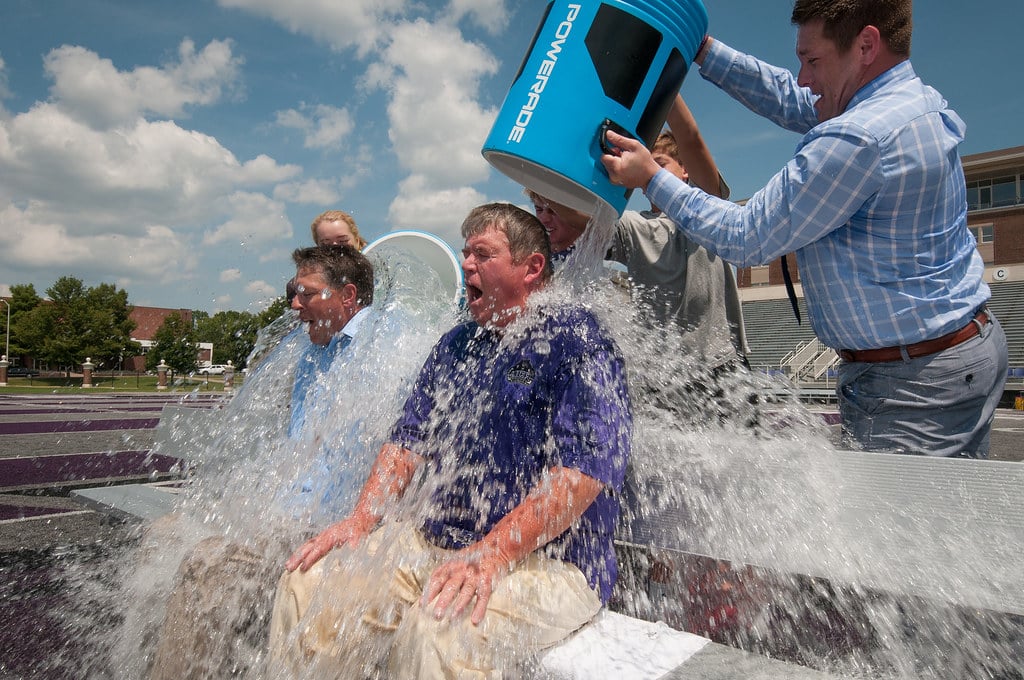
The Mental Health Ice Bucket Challenge follows a simple format that’s intentionally accessible to everyone, regardless of budget or circumstances. Participants film themselves pouring a bucket of ice-cold water over their heads, then post the video on social media using the hashtag #SpeakYourMIND.
In their posts, they’re encouraged to share why mental health matters to them, nominate others to take the challenge, and donate to Active Minds. The challenge incorporates educational components that go beyond just getting wet.
Participants are encouraged to share mental health resources, including self-care tools, ways to support friends struggling with mental illness, and information about accessing crisis support available through activeminds.org. This transforms each video from simple entertainment into a potential lifeline for someone watching who might be struggling.
Unlike some viral challenges that focus purely on the spectacle, #SpeakYourMIND emphasizes authentic storytelling. Many participants share personal experiences with mental health challenges, their own struggles with depression, anxiety disorders they’ve managed, or loved ones they’ve lost to suicide.
These vulnerable disclosures create powerful moments that normalize mental health conversations and show others they’re not alone.
Real Impact: Beyond the Videos

While viral challenges are often criticized as “slacktivism” that generates attention without meaningful change, the Mental Health Ice Bucket Challenge has demonstrated tangible impact in several crucial areas.
Financial Support for Mental Health Organizations
The most measurable impact is the hundreds of thousands of dollars raised for Active Minds. These funds directly support the organization’s work establishing mental health awareness programs on college campuses and in high schools nationwide.
Active Minds provides training for student leaders, creates peer support networks, hosts educational events, and develops resources that help young people identify and respond to mental health crises in their communities.
This financial influx allows Active Minds to expand programming, reach more schools, train more peer advocates, and ultimately save lives through suicide prevention and early intervention.
The money isn’t abstract, it translates into workshops, support groups, crisis response training, and mental health literacy that equips young people to help themselves and their friends.
Destigmatizing Mental Health Conversations
Perhaps even more valuable than the donations is the challenge’s role in normalizing mental health discussions. Every video posted is a public declaration that mental health matters and that talking about it shouldn’t be shameful.
When thousands of people, including peers, role models, and community leaders, publicly participate, it sends a powerful message that seeking help is acceptable and even admirable.
Emma Umbleby, a participant quoted in the Daily Illini, emphasized this impact: “I think it’s really important that we as a society are getting better about destigmatizing mental health. It’s nothing to be ashamed of, and most people will need mental health counseling or just even therapy or something along those lines… It’s always okay to ask for help”.
Junior Oliver Gray noted the challenge’s consciousness-raising effect: “A lot of people took notice of the challenge and realized that mental health is an issue that needs to be dealt with”. This increased awareness creates cultural permission for struggling individuals to speak up rather than suffering silently.
Creating Entry Points for Help-Seeking
By encouraging participants to share mental health resources alongside their videos, the challenge creates countless entry points for people who need help. Someone scrolling social media who sees a friend’s video might click on a crisis hotline link, explore self-care tools, or learn how to support someone struggling with suicidal thoughts.
Brett Curtis, director of community fundraising with Active Minds, highlighted why this matters: “The majority of mental health conditions are diagnosed, are happening to young people. It’s students in college and high school.
Active Minds has found actually that 70% of youth and adults don’t know how to speak with a friend about mental health. It’s something that deserves to have recognition and conversations every day”.
The challenge addresses this knowledge gap by distributing practical information through trusted social networks. When your friend shares resources, you’re more likely to engage with them than if you encounter the same information from an institution or authority figure.
Building Community and Connection
Mental illness thrives in isolation, but the challenge creates visible community around mental health. Seeing hundreds or thousands of people in your social networks participating sends a message: you’re not alone, your struggles matter, and help is available.
This sense of solidarity can be life-changing for someone who felt completely isolated in their pain.
The challenge also facilitates personal disclosures that deepen relationships. When participants share their own mental health stories, they often inspire others to open up as well, creating ripple effects of vulnerability and connection that extend far beyond the initial videos.
Final Thoughts
If you participated in the challenge, the most important question isn’t whether you got enough likes on your video. It’s whether you followed through, did you donate, share resources, start conversations, check on friends, or seek help yourself?
If you didn’t participate, you can still contribute by learning about mental health, supporting people around you who struggle, and advocating for better mental health services in your community.
The ice buckets may be empty now, but the conversation they started doesn’t have to end. That’s where the real impact happens, not in the viral moment, but in the sustained commitment to making mental health care accessible, acceptable, and effective for everyone who needs it.